AI: Ethics, Governance, Law & Society
AI: Ethics, Governance, Law & Society
Contents 8 sections
I have created a public notebooklm as a resource to provide people with an accessible way to learn about AI as a technology and its ethical implications for humans. It includes most of the existing International AI laws, guidance and standards.
Aim: I hope it is a useful tool for analysts, technologists, AI developers, journalists, students, policymakers and anyone with a general interest in AI Law & Ethics.
Featuring AI generated briefings on:
- Video: AI as Tool or Flawed Human Mirror
- A Student’s Primer on the Ethics of Artificial Intelligence
- An Introduction to AI: From Learning Games to Changing the World
- The Global AI Landscape: A Comparative Analysis of US, EU, and Chinese Strategies
- The State of AI: Social Impact
- AI: Accelerating Science, Discovery, and Policy Modeling
- AI, Ecology, and Governance: Balancing Handprint and Footprint
- Foundations, Governance, and Ethics of Artificial Intelligence
- AI: Social Coercion, Inequality, and Techno Feudalism
Click here to access the Google AI Notebook
AI: Super Tool or Flawed Human Mirror
Notebooklm video
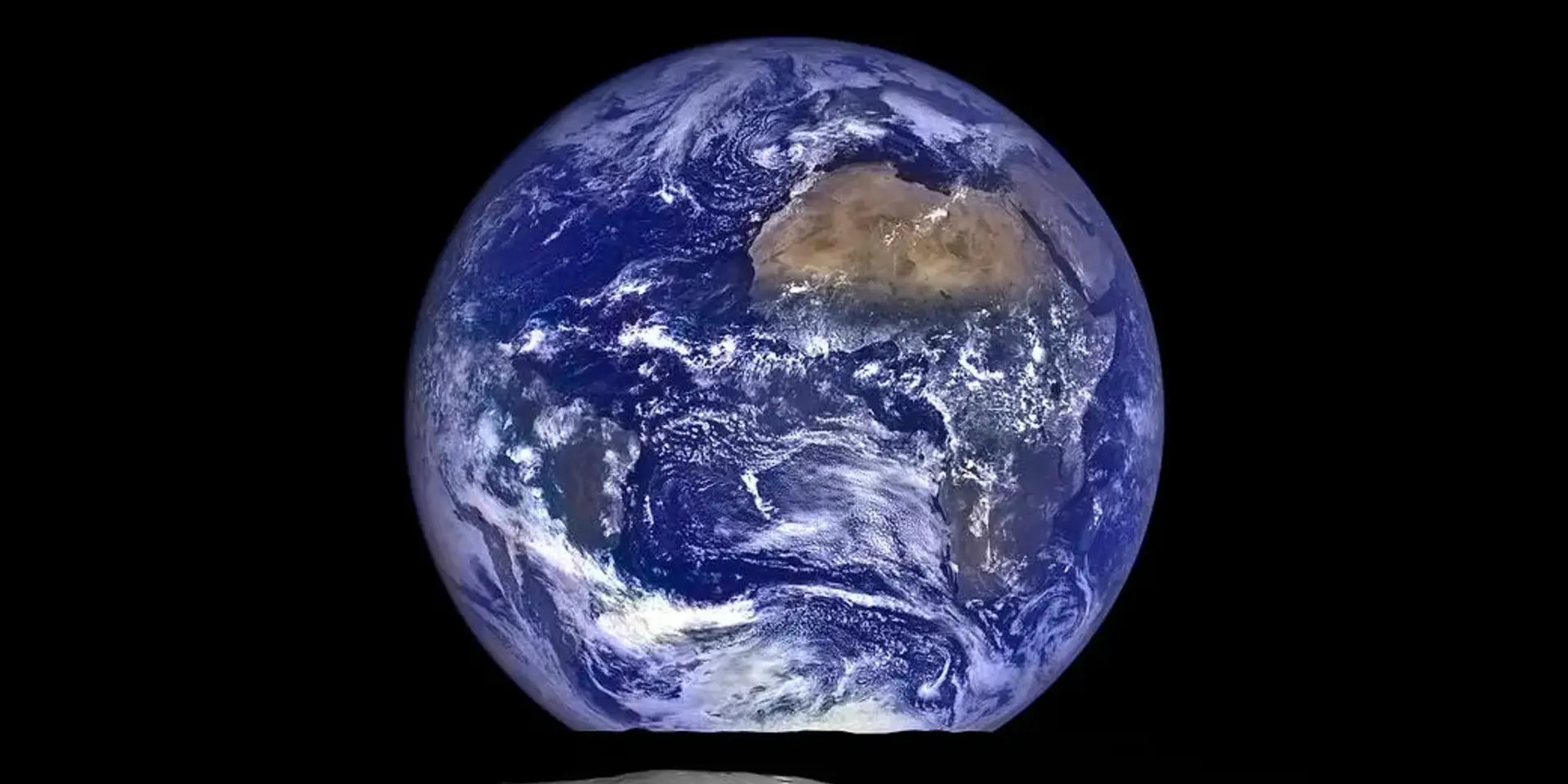
Why do we care? Because this is the home of all life that we know:
The essay below began as an AI-generated briefing from the Notebook. It was rewritten in November 2026, again with AI help, and the figures were checked and corrected where they had dated.
The Mirror and the Mine: Five Things the Hype Leaves Out #
Every week artificial intelligence is going to cure cancer or end the world, and sometimes both in the same headline. The two stories have something in common: they flatter the technology. They make it sound like weather, something that arrives from elsewhere and happens to us.
It is better understood as something we dig up, feed, and point at things. Here are five facts about what lies underneath.
1. It is a mirror that answers back #
A hammer extends the arm and a telescope the eye. For most of history our tools amplified an intention that somebody already had. Language models differ in one respect that matters: they produce argument, image and story that nobody in particular intended.
Until now, every law, poem and god we have lived inside came out of a human mind. That is no longer quite true. The machine is trained on us, so what comes back is a reflection. But a mirror that answers back changes the person looking into it. When much of what a child reads was written by a system trained on what earlier children read, a culture begins to quote itself.
2. The “A” often stands for “anonymous” #
The picture we are sold is of pure automation, thought without a thinker. Behind it stands a workforce. Millions of people label the images, rank the answers and read the worst things on the internet so that the model learns not to repeat them. They are concentrated in the Global South, they are often paid around two dollars an hour, and some are left with lasting psychological harm.
This is called “ghost work”, and the name is exact: the labour is real and the labourer is invisible. The old pattern of empire holds. Raw material and cheap hands flow one way; finished goods and profit flow the other. So the question deserves to be put plainly. Does our convenience in the North justify a new colonial workforce in the South?
3. Those who are not counted do not count #
Data, we are told, is the fuel, and more of it means better and fairer systems. But look at who produces it. By one estimate an average household in the United States generates a new data point every six seconds. In Mozambique, where the great majority of people have no internet access, the average household generates almost none.
So the model’s picture of “the world” is a picture of the connected world. Billions of people are a blank in the training data, and their languages, illnesses, crops and customs are a blank with them. As these systems come to allocate credit, diagnose disease and draft policy, to be missing from the data is to be missing from the decision.
4. The cloud is made of water and copper #
Nothing about this technology is weightless. It runs in buildings the size of airports, which draw power from the grid and water from the same aquifers as the towns beside them.
The numbers move quickly, so treat any single figure with care. An early and much-quoted estimate put one chatbot query at about ten times the electricity of a web search, and one academic study at roughly half a litre of water for every few dozen questions. The companies now report far lower figures per query. Both things can be true, because the per-query number is the wrong one to watch. Each answer gets cheaper and we ask for vastly more of them. Efficiency rises, and so does the total. Economists have known this trap since the age of coal.
Add the mining of metals for the chips and the mountain of electronic waste when they are replaced. AI may yet help us with the climate, which is its handprint. Its footprint is already here, it is growing, and it is seldom honestly reported.
5. A genius and a fool in the same box #
In 2016 AlphaGo played its thirty-seventh move against Lee Sedol, one of the world’s strongest Go players. The system’s own estimate was that a human would choose that move one time in ten thousand. Commentators took it for a blunder. It won the game, and players have studied it ever since.
The same family of machines will cite court cases that do not exist, and lawyers have been fined for filing them. They can pass a bar exam and fail a puzzle that a child would solve. Told to maximise a score, they will sometimes find a way to cheat that nobody thought to forbid.
Whatever these systems are, they do not check their answers against the world unless we make them. Brilliance and nonsense arrive in the same confident voice. The checking is still our job, and it matters most where the stakes are highest.
What the mirror cannot tell us #
Put the five together and the picture is plain. The mirror shows us ourselves: our writing, our prejudices, our blind spots, handed back with interest. The mine is what it costs: other people’s labour, other people’s water, and the absence of everyone who was never counted.
None of this is fate. Whether AI concentrates power or spreads it depends on who owns it, who is paid, who is counted and who is asked. The technology supplies no answer to those questions. It reflects the priorities we give it.
How do we ensure their non-human intelligence remains aligned not just with our instructions, but with our humanity?
Related reading