Elon Musk – Part 2: The Limits of Free Speech & The Paradox of Tolerance
We look at the dark wizard’s takeover of the public forum and his techno-Stalinist tendencies
updated 06 November 2026
In Part 1 we saw how Musk takes all the wrong lessons from the writers he claims to admire. Here we examine the integrity of his views on free speech, and the engines of hate and disinformation he has built.
“If liberty means anything at all, it means the right to tell people what they do not want to hear.”1 (George Orwell)
Nature Abhors a Vacuum #
We left Musk as a villain who thinks he is a hero — “a ruined and terrible form” of a man, an extremist crusader behind a mask of freedom.
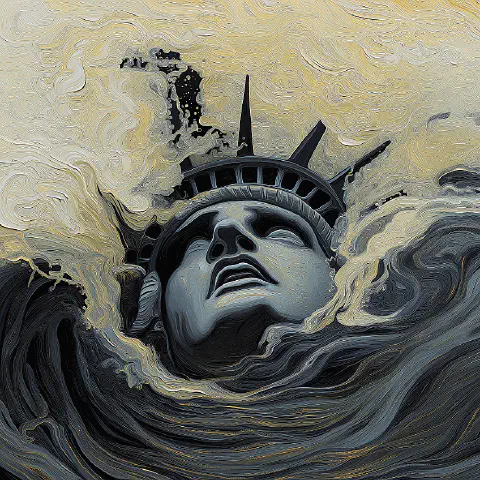
But nature abhors a vacuum, and at its moment of darkness Gotham — the city that nursed Trump and was ravaged by him for its pains — found a mayor who understands what free speech is for:
“We can respond to oligarchy and authoritarianism with the strength it fears, not the appeasement it craves… And if there’s any way to terrify a despot, it is by dismantling the very conditions that allowed him to accumulate power.” (Zohran Mamdani)
“Now this is not the end. It is not even the beginning of the end. But it is, perhaps, the end of the beginning.”2(Churchill)
We need a new wave of leaders like Mamdani who speak truth to power and stand up to the tech lords. Which brings us to the tricksy topic of free speech, since Musk promotes himself as its warrior.
What Is Free Speech? #
“Everyone has the right to freedom of opinion and expression; this right includes freedom to hold opinions without interference and to seek, receive and impart information and ideas through any media and regardless of frontiers.”3 (Universal Declaration of Human Rights, art. 19)
Free speech is not only freedom from state suppression, though it often takes that form under authoritarian regimes. It is a culture that permits and encourages a healthy diversity of opinion, because diversity gives a society a better chance of collective success — combinatorial problem‑solving, diverse exploration — as well as individual liberty.
Orwell thought the primary threat to free thought in England was not the censor but publishers and editors who kept topics out of print because they were “frightened of public opinion”, or of the establishment. He described a prevailing orthodoxy — the set of ideas all right‑thinking people are expected to accept — and how anyone who challenges it is “silenced with surprising effectiveness” because the opinion is thought crass or impolite. (I am aware that my own polemical prose would be a black mark against me in some cultured English circles, if anyone read it.)
Orwell also warned against the belief that democracy could be defended by “totalitarian methods”, a warning many politicians, Starmer’s Labour among them, have failed to heed. And we now see the hard right appropriating Orwell to bolster nativist ideas of Englishness — finishing racist opinion pieces with his quotations.4
Noam Chomsky is Orwell’s successor on media and the establishment. In Manufacturing Consent, he and Edward Herman set out the Propaganda Model: mass media perform a propaganda function not mainly through official censorship but through market forces, internalised assumptions and self‑censorship. Five filters weed out dissent and produce a “spectrum of acceptable opinion”; those who rise to influence already hold the beliefs that fit the institution. As Chomsky told Andrew Marr in 1996:
“I’m not saying you’re self‑censoring. I’m sure you believe everything you’re saying. But what I’m saying is that if you believed something different, you wouldn’t be sitting where you’re sitting.”5
These freedoms have never been, and can never be, absolute. For most of history they belonged to propertied men — a situation some in the West seem keen to revive — and there have always been limits: treason, clear incitement to violence or insurrection.6 The hypocrisy of free‑speech absolutism is its refusal to recognise that rights are not laws of nature like gravity but human constructs that must be exercised and protected in mutually supporting ways, or they become the tools of tyrants and oligarchs.
A coherent system of free speech requires compossibility: views and actions capable of living together. Our diverse views must be able to coexist and to support the system that makes them possible.
Towards a Universal Ethical Framework
“1. Everyone has the right to freedom of expression… 2. The freedom and pluralism of the media shall be respected.”7 (EU Charter of Fundamental Rights, art. 11)
Popper and the Paradox of Tolerance #
The central philosophical challenge to free‑speech absolutism is Karl Popper’s paradox of tolerance:
“Unlimited tolerance must lead to the disappearance of tolerance. If we extend unlimited tolerance even to those who are intolerant… then the tolerant will be destroyed, and tolerance with them… We should therefore claim, in the name of tolerance, the right not to tolerate the intolerant.”8
Popper, a staunch defender of the open society, held that there must be limits to tolerance; otherwise the intolerant seize power and destroy the foundations of freedom — which is exactly what Musk, Trump and Netanyahu are doing, and what Orbán did until Hungary’s voters removed him in April 2026. He went further than I think reasonable in claiming that any movement preaching intolerance places itself outside the law, which is why limits need careful construction to avoid creating a new orthodoxy (see Policing the Perimeter, below).
In a digital town square like X, the paradox marks the difference between protecting diverse viewpoints and actively platforming and algorithmically amplifying messages that incite hatred and violence against protected groups — and between that and suppressing the voices of tolerance and evidence. Musk is choosing to use his extraordinary power to reduce diversity of opinion and champion hate speech. The crucial questions are:
- If your use of free speech spreads hate, incites violence and attacks intellectual, political, racial or ethnic diversity, will it undermine the very system that grants you the right?
- Do your beliefs permit a plurality of opinions and freedom for others unlike you?
If not, your freedom is not compossible with others having the same freedom, and it must be curtailed to the extent necessary to protect diversity of opinion and freedom of action. (The astute reader will note that our economic system fails the same test, since freedom requires a far fairer distribution of resources and influence than exists today.)
Privatisation of the Town Square #
Musk said he bought Twitter to defend free speech and to lift content moderation “that goes far beyond the law”. In that, he has succeeded — though not in the sense some expected.
X is now an engineered distribution channel for spreading extremist narratives at scale: a force multiplier for hate and disinformation.
Since the acquisition: mass layoffs of moderation staff; the disbanding of the Trust and Safety Council; the reinstatement of accounts banned for hate speech and extremism; and Musk’s personal amplification of antisemitic, racist and transphobic content. The record of the owner reveals the contradictions we see across the whole Trump administration:
- Hate speech prevalence. The Center for Countering Digital Hate found X failed to remove 86% of posts flagged for extreme hate speech — racist caricatures, Holocaust denial, Nazi imagery — after they were reported.9
- The lawsuit as silencer. X sued the CCDH. Judge Charles Breyer threw the case out, finding Musk was “punishing the defendants for their speech”.10
- Suppression of critics. Journalists banned outright; links to critical outlets throttled; rules enforced selectively to protect the owner.
- The law of Musk. His free‑speech advocacy covers his own speech and that of his fans; as Unsworth learned, it ends where his feelings or corporate interests begin.
- Algorithmic amplification. Peer‑reviewed research found the weekly rate of hate posts roughly 50% higher after Musk’s purchase, and likes on hate content up 70%.11 Musk’s interactions act as a digital kingmaker: one engagement with an AfD politician took her daily X audience from 230,000 to 2.2 million. Tommy Robinson’s posts drew over 580 million views in the fortnight after Southport. Researchers and Ukrainian users have also alleged the use of AI‑generated fake accounts and the down‑ranking of Ukraine content; those allegations are not proven.
Musk’s version of free speech has been better described as “freedom for me, but not for thee”.
Grok and Grokipedia #
The danger is compounded by xAI, its model Grok, and Musk’s right‑wing knock‑off of Wikipedia, Grokipedia. Musk calls Grok “maximally truth‑seeking”:
“Within days of its release, users discovered evidence suggesting that Grok 3 had been programmed to avoid unflattering mentions of both Musk himself and President Donald Trump, particularly regarding misinformation.”12
Grok has praised Hitler, backed Putin, and in July 2025 styled itself “MechaHitler” — the direct consequence of deliberately loosened guardrails and its owner’s fragile grasp of truth.
Grokipedia is intended as a factual base for Grok, which Musk says is also trained on the firehose of X. That is a closed loop: the AI’s picture of reality depends on content chosen for amplification on a platform that privileges far‑right narratives. Grokipedia is a strategic attempt to build a monolithic, ideologically aligned source of truth for the privatised Ministry of Truth — bypassing decentralised, community‑governed knowledge in favour of a proprietary, manipulable alternative. An AI trained on an ecosystem engineered to promote intolerance will encode it, not challenge it.
“On the [Grokipedia] entry for Adolf Hitler, the führer’s leadership and ‘rapid economic’ achievements are noted before the Holocaust; the ‘Islam’ page questions the religion’s ‘inherent compatibility with liberal democracy.’”13
Pro‑Russian Disinformation #
Musk’s amplification of narratives on X, and much of the conduct of the US and Israeli administrations, align with the strategic goals of the Russian Federation.
“The first paragraph of the Grokipedia entry for Russia’s invasion of Ukraine repeatedly cites the Kremlin’s official website, using a speech from Vladimir Putin to describe the invasion’s purpose as ‘demilitarizing and denazifying Ukraine’…”14
Russia’s primary objective is to undermine the European Union, and X is a force multiplier for its disinformation.15 The platform provides high‑reach “organic” amplification for Kremlin‑aligned narratives and fails to act on reports;16 Musk’s own posts have been spread by the Doppelgänger bot network.17 Of 125 user‑flagged illegal posts in one study, one was removed.
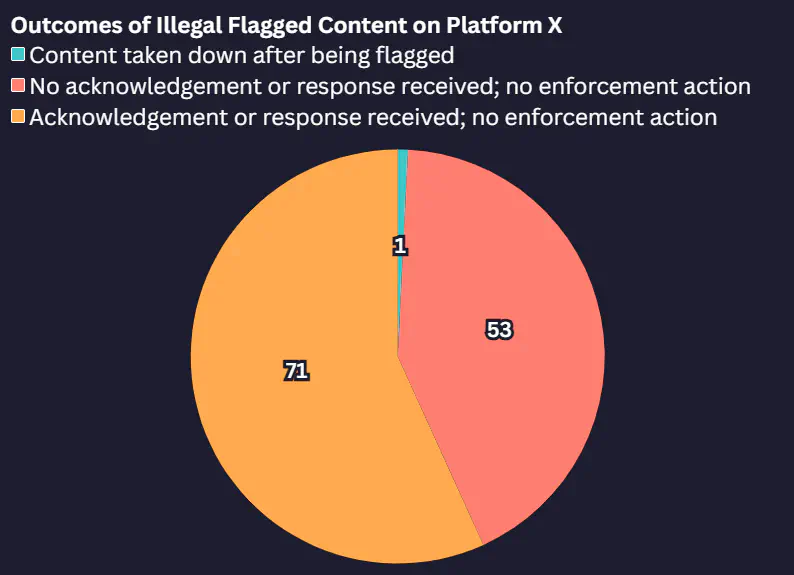
These actors share a goal: fracture European consensus and erode trust in democratic institutions. Their contempt for the EU is trivially easy to document. They would like to see it destroyed.
Techno‑Stalinism #
“Who controls the past controls the future: who controls the present controls the past.”
Stalin’s regime rewrote history and controlled knowledge to control truth. Musk’s digital empire follows the model — his interest in 1984 looks less literary than instructional:
- Enforced orthodoxy. Where Stalinism made intellectuals afraid to challenge the line, Musk’s system enforces an oligarchical orthodoxy: journalists, politicians and researchers who challenge the X/Grok narrative face defamation, suppression or lawsuits (Unsworth, the CCDH).
- Rewriting history. Where Stalin purged photographs and archives, Grokipedia and X do it digitally: an AI fed a curated stream becomes a historical revisionist that minimises inconvenient truths.
- Centralised reality. Control of the distribution channel (X), the knowledge base (Grokipedia) and the interpreter (Grok) is a private monopoly over reality, insulated from democratic checks.
A Dark Wizard #
Musk’s intervention in UK and European politics is part of a sustained, aggressive campaign of international interference — an unprecedented assault on European sovereignty by a foreign businessman. He attacks EU institutions and leaders as enemies of free speech, or worse.
The EU opened formal DSA proceedings against X in December 2023.18 In December 2025 the Commission imposed the first fine ever issued under the DSA — €120 million — for the deceptive design of the blue checkmark, an opaque advertising repository and refusal to give researchers access to public data.19 Musk’s response was that the EU should be “abolished”; weeks later the US State Department imposed visa bans on five Europeans including the former commissioner Thierry Breton.20 X has appealed to the General Court, and in September 2026 the US Department of Justice applied to intervene on Musk’s side — the first DSA enforcement case to reach the court, and now a test of whether Europe can regulate American platforms at all.21
What is his beef with the EU? Those bloody communists in Brussels passed a law requiring safer and more transparent online environments.
Musk has supported far‑right parties across more than eighteen countries on six continents,22 with a consistent script: nations “teetering on the edge of economic and cultural collapse” from “multiculturalism that dilutes everything”. In Germany he called the AfD “the last spark of hope” and live‑streamed with Alice Weidel. A European Parliament study describes his activity as a second front of disinformation aligned with Russia’s aim to destabilise Western democracies and undermine support for Ukraine — a force multiplier for established foreign‑interference operations.23
“Hard‑right commentators, politicians and activists in Europe have uncovered a secret to expanding their influence: engaging with Elon Musk.”24 (Associated Press)
The support is also a strategy of political capture and regulatory avoidance.25 Matteo Salvini lobbied for Starlink contracts and against EU regulation of X after receiving Musk’s algorithmic blessing. It is part of a wider project of keeping Europe weak and open to predation.
The Rape of Europa: Sovereignty, Security & the Ethical Tech Opportunity
Spotlight: Musk’s Attacks on Democracy and Law in the UK #
Musk has called Britain a “tyrannical police state”, pushed a petition for an immediate general election, declared that “only Reform can save Britain”, and suggested the King dissolve Parliament. X’s algorithm funnels new users towards extreme right content — in a Sky News test, over half the political content shown to new accounts was categorised as extreme.26
His relationship with Reform UK has been volatile. He validated Farage by questioning why the media called him far‑right (tripling Farage’s daily audience), met Farage and treasurer Nick Candy, and was reported to be considering a donation of up to $100 million.27 Then, in January 2025, he announced that Farage “doesn’t have what it takes” and should be replaced, after Farage declined to endorse Tommy Robinson. No donation has been disclosed; the lesson is that Musk’s support is conditional on alignment with the most extreme figure in the room.
Analysts note that the timing of his assault had little to do with chance and much to do with the implementation of the Online Safety Act.28
He has called Keir Starmer an “evil tyrant”; accused him of running “two‑tier policing” against white people; accused him of being “complicit in the rape of Britain” over grooming‑gang prosecutions during his time at the CPS, which Starmer refuted as lies;29 and said that safeguarding minister Jess Phillips, whom he called a “rape genocide apologist”, should be imprisoned.30
His management of X and his rhetoric have been identified as key drivers of far‑right unrest and conditions for violence in Britain.31 In summer 2024 three children were murdered and ten people injured at a Taylor Swift‑themed dance class in Southport. Far‑right influencers were ready to blame Islam and undocumented migrants; riots followed. Tommy Robinson’s anti‑Muslim posts received immense algorithmic promotion — 580 million views in two weeks — and Robinson thanked Musk for giving him “a voice again”, and later for paying his legal costs.32 Musk posted that civil war in Britain was “inevitable”,33 amplified a fabricated claim that rioters would be sent to camps in the Falklands, and demanded Robinson’s release as a “political prisoner”. In October 2025 he urged “the English to ally with the hard men like Tommy Robinson and fight for their survival or they shall surely all perish”.
Despite powers under the Online Safety Act to fine up to £18 million or 10% of global turnover, no enforcement action has been taken against Musk or X for a sustained campaign of political interference and incitement.34 Ofcom does have an open investigation into X, over illegal content and Grok‑generated deepfakes, but it was still undecided at the end of October 2026 and does not touch the politics. Meanwhile ministers counsel “humility” before the tech lords while elderly peaceful protesters are arrested under terrorism legislation.35
“Peter Kyle, the UK’s technology secretary, recently suggested that governments need to show a ‘sense of humility’ with big tech companies and treat them more like nation states… I think it’s a baffling misunderstanding of the role of a democratically elected and accountable leader.”36 (Marietje Schaake)
The Power to Dominate by Hate #
What are people like Mamdani in the US and Zack Polanski in the Green Party fighting? The corrosive influence of wealth on public office. The purchase of political power and media. The amplification of fear and hatred towards the weak, the vulnerable and the poor.
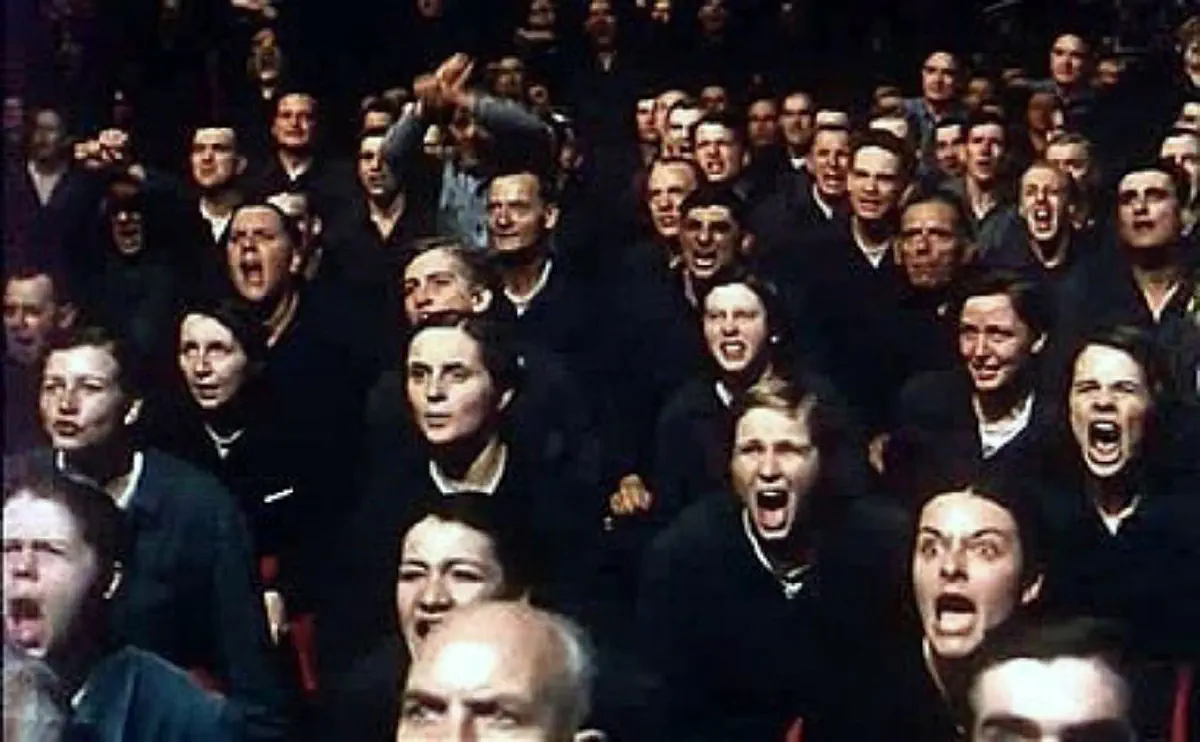
“Forget George Orwell’s ‘Two Minutes Hate’. That was strictly for amateurs. If you haven’t got in a full half hour of loathing for foreigners then you clearly don’t love your country very much… Everyone now has licence to hate.”37 (John Crace)
The man who promised X would be a new hope for free speech has shown himself, unsurprisingly, to be the most effective manufacturer of disinformation and hate alive. We see the same pattern worldwide as oligarchs buy media to support authoritarian movements. Even with the best intentions no man should wield such power; his intentions are not the best, and he is waking forces better left dormant.
“If you tolerate this, then your children will be next.”38 (Manic Street Preachers)
Policing the Perimeter #
The deeper problem is not the available laws, though new technologies need new tools. What are the permissible limits of speech — the point at which it becomes a systemic danger?
The greatest danger, as in economics and politics, comes from a few immensely wealthy individuals controlling most of our media and information. Tyranny shifts from the state to privatised totalitarianism, especially when those individuals support authoritarian movements that work with them to control the message. Musk’s “free‑speech absolutism” was a Trojan horse for a privatised Ministry of Truth — Popper’s warning exactly: exploiting tolerance to destroy it, as Hitler and Trump exploited democracy.39
Compossibility requires that one person’s speech not destroy another’s foundational freedoms. Limits are therefore justified on five kinds of content:
- Speech undermining sovereignty and public safety — coordinating actions that threaten the structural operation of the state (publishing classified material that endangers lives), subject to a public‑interest defence for whistleblowing.
- Incitement to imminent violent action — insurrection, as on 6 January 2021, which bypasses debate to overthrow the processes securing all other freedoms.
- Hate speech and advocacy of intolerance — the core of Popper’s paradox: unlimited freedom for the intolerant drives tolerant voices from the square.
- Deliberate disinformation and election interference — when systematic lying destroys shared reality, democratic debate and self‑government become impossible.
- Coercive and harassing speech — targeted abuse used to silence or drive out individuals and minorities, producing an oligarchical orthodoxy.
Fair, proportionate and effective policing of these limits requires: a clear distinction between the merely offensive and the systemically dangerous; the difference between hurtful speech and speech that is cruel, bullying or dehumanising; transparency about editorial and algorithmic decisions and plurality of ownership; and regulators with the tools, resources and political backing to act — knowing the powerful will abuse their platforms to resist.
Managing free speech is like managing traffic. The system saves lives while allowing movement because the rules are transparent, applied by independent police and courts (impartial), and exist so that one person’s freedom to drive does not kill another (safe).
European Regulatory Frameworks #
The Digital Services Act and the AI Act together confront the systemic risks of platforms like X and models like Grok, at the moment when the boundary between user content, algorithmic recommendation and AI‑generated content is dissolving. The UK’s Online Safety Act does some of the same work.
- The DSA targets systemic platform harms. Very Large Online Platforms must identify and mitigate risks from disinformation, algorithmic amplification of extremism and opaque recommender systems. It treats platforms as active shapers of attention, not passive hosts. The €120m fine and the Commission’s acceptance of X’s remediation plan in July 2026 show the machinery works, slowly.21
- The AI Act extends design regulation to general‑purpose models like Grok: transparency about training data, bias safeguards, accountability for harmful outputs. Note that the high‑risk obligations have been deferred to December 2027 under the Digital Omnibus.40
- When Grok generates or amplifies disinformation on X, the two Acts intersect: the DSA governs how it spreads, the AI Act why and how it was produced.
- The OSA focuses more narrowly on illegal and child‑harmful content, gives Ofcom investigation and enforcement powers, but stops short of regulating how algorithms shape discourse. Its critical flaw is that its duties bite on illegal content, and its false‑communications offence requires proof of intent to cause harm: an owner can gut moderation and tune algorithms toward extremism, with foreseeable results, while claiming protected expression and no specific intent.
In short, the OSA enforces conduct; the DSA and AI Act regulate design. Only the EU approach can address the existential risk posed by a single man able to warp a democracy’s informational integrity. Much of Musk’s political interference in Europe is aimed at neutering exactly these laws, and he now has the full weight of the US government behind him in Luxembourg.
A reminder, since that was a lot to read (and write). Everyone has freedom of speech and opinion. It is not absolute; it is bounded by laws against incitement, hate speech and defamation that keep us all able to exercise it. That requires major players to act in good faith or, failing that, to be prosecuted and if necessary banned. That requires political will.
It’s really not rocket science.
In Part 3: Musk’s planetary technology empire — SpaceX and Starlink, xAI, Neuralink, Optimus — and what Ukraine learned in October 2026 about who controls the sky.
Footnotes #
George Orwell, ‘Orwell’s Proposed Preface to Animal Farm ’ (censored) ↩︎
Winston Churchill, ‘Speech at the Lord Mayor’s Luncheon, Mansion House, November 10, 1942’ ↩︎
David Frost, ‘The Great Britain I love is dying’ ↩︎
Noam Chomsky, ‘The Big Idea’ ↩︎
See, for example, the narrow test in the US case of Brandenburg v. Ohio ↩︎
Karl Popper, ‘The Paradox of Tolerance’ ↩︎
Tom Gerken, ‘Elon Musk’s X anti-hate group case thrown out’ ↩︎
Daniel Hickey, Daniel M. T. Fessler, Kristina Lerman, Keith Burghardt , ‘X under Musk’s leadership: Substantial hate and no reduction in inauthentic activity’ ↩︎
Ng S.T. Chong, ‘Grok 3’s Brush with Censorship: xAI’s “Truth-Seeking” AI’ ↩︎
Matteo Wong, ‘What Elon Musk’s Version of Wikipedia Thinks About Hitler, Putin, and Apartheid’ ↩︎
Matteo Wong, ‘What Elon Musk’s Version of Wikipedia Thinks About Hitler, Putin, and Apartheid’ ↩︎
By Pascale Davies, ‘Exclusive: Elon Musk’s X fails to deal with Russian disinformation, breaching EU rules, study says’ ↩︎
Charles Terroille, Science Feedback, Saman Nazari & Ewan Casandjian, Alliance4Europe, ‘Flagged and Ignored: Testing X’s Response to EU Sanction Violations’ ↩︎
Der Spiegel, ‘German Election Campaign Flooded with Fake News and Videos’ ↩︎
‘Commission sends preliminary findings to X for breach of the Digital Services Act’ ↩︎
European Commission, “Commission fines X €120 million under the Digital Services Act”, 5 December 2025. ↩︎
AFP/Economic Times, “X appeals EU’s €120 million fine”, 30 October 2026; US State Department visa‑restriction announcement, December 2025. ↩︎
X Internet and X Holdings v Commission, Case T‑114/26; Musk v Commission, T‑121/26; US DOJ application to intervene, 24 September 2026. Politico, “Elon Musk’s X cooperates with €120M EU fine”, 18 March 2026; Commission acceptance of X’s action plan, July 2026. ↩︎ ↩︎
EDMO (originally published by Andrea Zitelli), ‘How Elon Musk’s powerful disinformation machine works’ & ‘Wikipedia, ‘Political activities of Elon Musk’ ↩︎
European Parliament, ‘Combating foreign interference in elections’ ↩︎
Erika Kinetz & Aaron Kessler, ‘Musk, a social media powerhouse, boosts fortunes of hard-right figures in Europe" ↩︎
Lily Radziemski, ‘Musk wields X to boost extreme right in Europe’ ↩︎
Kaitlin Tosh & Michelle Inez Simon, ‘How Elon Musk Is Boosting The British Right’ ↩︎
The reported $100 million donation was first carried by the Sunday Times in December 2024. Background: ‘Reform, Leave, and Russia Collusion’ (This link is an AI-generated research summary, not a primary source.) ↩︎
‘Elon Musk’s beef with Britain isn’t (only) about politics. It’s about tech regulation’ ↩︎
Sam Francis and Henry Zeffman,’Starmer attacks those ‘spreading lies’ on grooming gangs’ ↩︎
Victoria Derbyshire & Kate Whannel ‘Musk’s ‘disinformation’ endangering me, says Phillips’ ↩︎
Darren Loucaides, ‘How Elon Musk Helped Fuel the U.K.’s Far-Right Riots’ ↩︎
Peter Pink-Howitt, ‘Thread on why Robinson was acquitted’ ↩︎
BBC, ‘Musk hits back after PM criticises UK ‘civil war’ post" ↩︎
Though, to be fair to Ofcom, they have made the effort to refuse Freedom of Information requests about this. ↩︎
John Naughton, ‘Cringing before the tech giants is no way to make Britain an AI superpower’ ↩︎
Andrew Ahtiny, ‘AI expert Marietje Schaake: ‘The way we think about technology is shaped by the tech companies themselves’ ↩︎
John Crace, ‘Forget Orwell’s ‘Two Minutes Hate’ – the immigration debate shows real loathing" ↩︎
Manic Street Preachers, 1998 ↩︎
Arjun Appadurai, ‘An autoimmune disorder’: how Trump is turning American democracy against itself’ ↩︎
Regulation (EU) 2026/1744 (Digital Omnibus on AI), deferring high‑risk obligations to 2 December 2027. ↩︎